CUE: FIGBUILD 2026
Speculative Design for Sensory Perception
TIMELINE
3 Days
SKILLS
Prototyping
Product Design
Research
ROLE
UX/UI Designer
Video Director
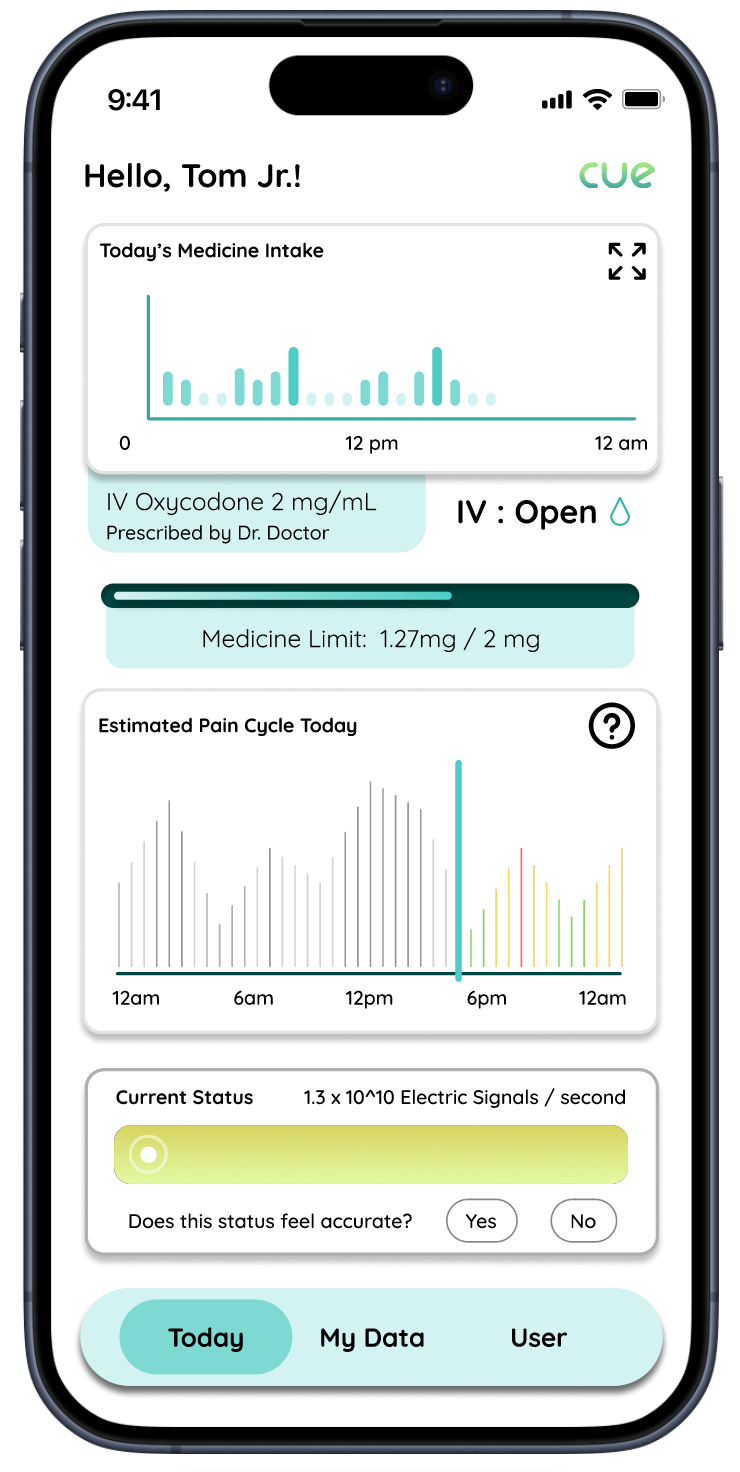
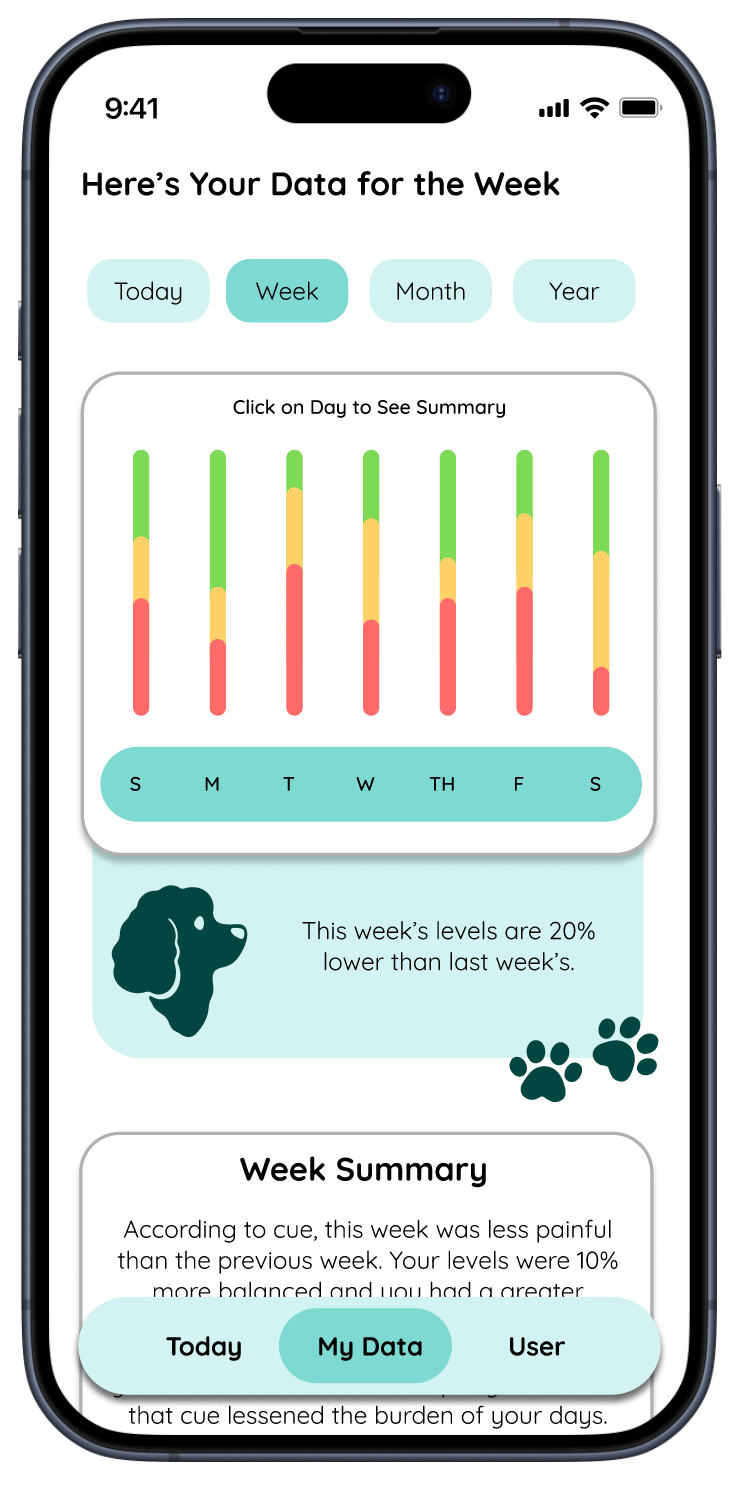
Table of Contents
This year was Figma’s second annual design hack-a-thon, “Figbuild”. The challenge was speculative design for sensory perception. Design a tool that tracks, measures, visualizes or quantifies an aspect of human sensory experience. Within the tool, provide the ability to detect, enhance, or manipulate those same sensory inputs.
Our challenge, design a tool that visualizes and automates the process of pain management. As of now, pain medication is administered the individuals and/or medical professionals.
1 Problem
2 Research
Chronic pain is often overlooked and the methods of treatment can be stressful, inaccessible, or risk addiction. There is yet to be a treatment to streamline the experience for individuals who experience chronic pain.With little opportunity to find relief, this can lead to: drug addiction, mental illness, and financial stress
Pain and nociception go hand in hand but have a key difference within the semantics of discussing pain management. Nociception is the neural process of detecting harmful stimuli. Pain is the subjective response to stimulated nociceptors.
Today, devices such as a CGMs or AIDS help monitor and regulate conditions like diabetes. Our new devices take inspiration from those modern tools to help increase the user’s quality of life. It would reduce the amount of pain they typically would endure by automatically administering medicine.
Veronica
44 yo
Female
5 ft 3 in
Chronic Pain
Veronica is experiencing perimenopause and has daily chronic pain. She faces financial instability and healthcare anxiety. Although she has access to pain medication, with a family history of addiction she is hesitant to administer opioid medicine orally and doesn’t trust herself.
As her symptoms and mood swings worsen she seeks an accessible and affordable form to administer her medication.
Tom Jr.
11 yo
Male
4 ft 8 in
Arthritis
Tom is the oldest of three siblings. He enjoys sports, but suffers from chronic pain due to his juvenile idiopathic arthritis. Since he is still young, he can’t articulate his discomfort to his parents or friends in fear of embarrassment or pity. Tom wishes he could be more active and play with other kids.
His parents are searching for a solution that allows them to monitor and regulate his health asynchronously.
Jackie
80 yo
Female
5 ft 1 in
Post-Surgery
After a major spinal surgery, Jackie has been prescribed opiates to manage her post-surgery recovery. Her doctor is concerned that Jackie is administering the medicine incorrectly because of her quick refill turnaround. She has difficulty with her memory, but she is unwavering that she is right.
Her doctor wants to recommend a form of medicine intake which can document her information clearly.
3 Ideation
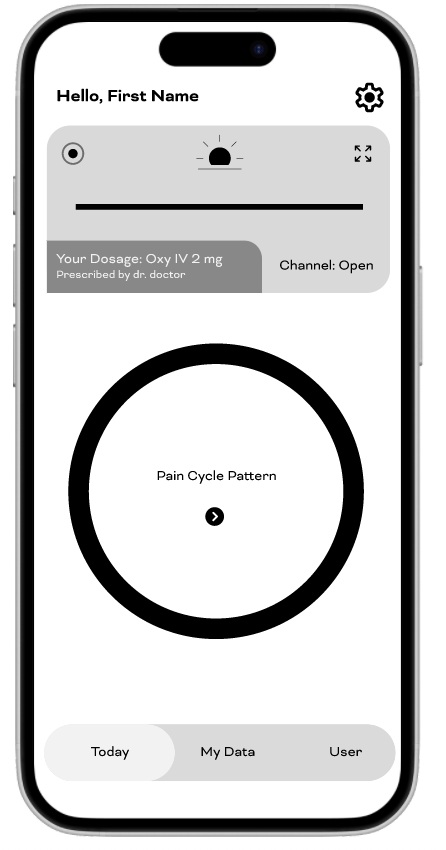
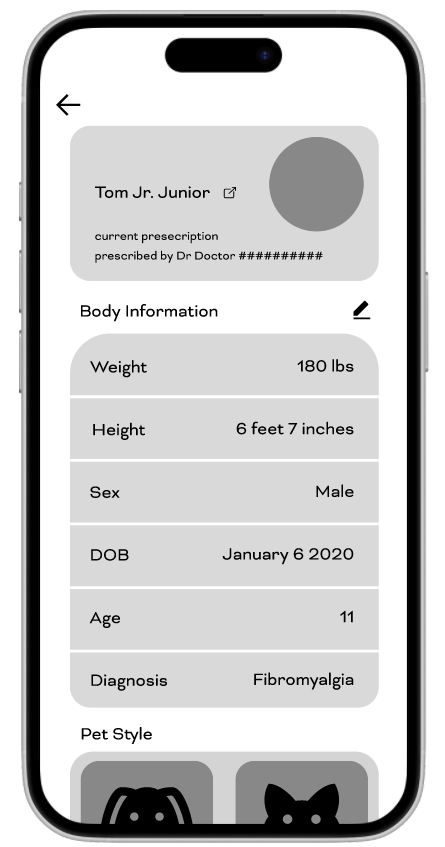
The app should prioritize clarity, user experience, and be accessible to many ages. Lo-fi helped us delineate information formatting and style not only looks but feel realistic.
Our biggest hurdle was designing graphs that are clear and display the information in a digestible format. The wireframes frames (while the format didn’t stay for the final product) were crucial in our ideation phase to see the faults for graph usage.
4 Final Product
Clickable Prototype
The final product is a full experience from homescreen to app.
Prototype may take a minute to load, please be patient.
CUE: FIGBUILD 2026
Speculative Design for Sensory Perception
TIMELINE
3 Days
SKILLS
Prototyping
Product Design
Research
ROLE
UX/UI Designer
Video Director
Table of Contents
This year was Figma’s second annual design hack-a-thon, “Figbuild”. The challenge was speculative design for sensory perception. Design a tool that tracks, measures, visualizes or quantifies an aspect of human sensory experience. Within the tool, provide the ability to detect, enhance, or manipulate those same sensory inputs.
Our challenge, design a tool that visualizes and automates the process of pain management. As of now, pain medication is administered the individuals and/or medical professionals.
1 Problem
2 Research
Chronic pain is often overlooked and the methods of treatment can be stressful, inaccessible, or risk addiction. There is yet to be a treatment to streamline the experience for individuals who experience chronic pain.With little opportunity to find relief, this can lead to: drug addiction, mental illness, and financial stress
Pain and nociception go hand in hand but have a key difference within the semantics of discussing pain management. Nociception is the neural process of detecting harmful stimuli. Pain is the subjective response to stimulated nociceptors.
Today, devices such as a CGMs or AIDS help monitor and regulate conditions like diabetes. Our new devices take inspiration from those modern tools to help increase the user’s quality of life. It would reduce the amount of pain they typically would endure by automatically administering medicine.
Veronica
44 yo
Female
5 ft 3 in
Chronic Pain
Veronica is experiencing perimenopause and has daily chronic pain. She faces financial instability and healthcare anxiety. Although she has access to pain medication, with a family history of addiction she is hesitant to administer opioid medicine orally and doesn’t trust herself.
As her symptoms and mood swings worsen she seeks an accessible and affordable form to administer her medication.
Tom Jr.
11 yo
Male
4 ft 8 in
Juvenile Arthritis
Tom is the oldest of three siblings. He enjoys sports, but suffers from chronic pain due to his juvenile idiopathic arthritis. Since he is still young, he can’t articulate his discomfort to his parents or friends in fear of embarrassment or pity. Tom wishes he could be more active and play with other kids.
His parents are searching for a solution that allows them to monitor and regulate his health asynchronously.
Jackie
80 yo
Female
5 ft 1 in
Post-Surgery
After a major spinal surgery, Jackie has been prescribed opiates to manage her post-surgery recovery. Her doctor is concerned that Jackie is administering the medicine incorrectly because of her quick refill turnaround. She has difficulty with her memory, but she is unwavering that she is right.
Her doctor wants to recommend a form of medicine intake which can document her information clearly.
3 Ideation
The app should prioritize clarity, user experience, and be accessible to many ages. Lo-fi helped us delineate information formatting and style not only looks but feel realistic.
Our biggest hurdle was designing graphs that are clear and display the information in a digestible format. The wireframes frames (while the format didn’t stay for the final product) were crucial in our ideation phase to see the faults for graph usage.
4 Final Product
Clickable Prototype
The final product is a full experience from home-screen to app with loading animations and verifications. In-app instances of data learning and interactions with Spoonie build a sense of realism. Final formatting is clear and informative without cluttering the interface.
Prototype may take a minute to load, please be patient.